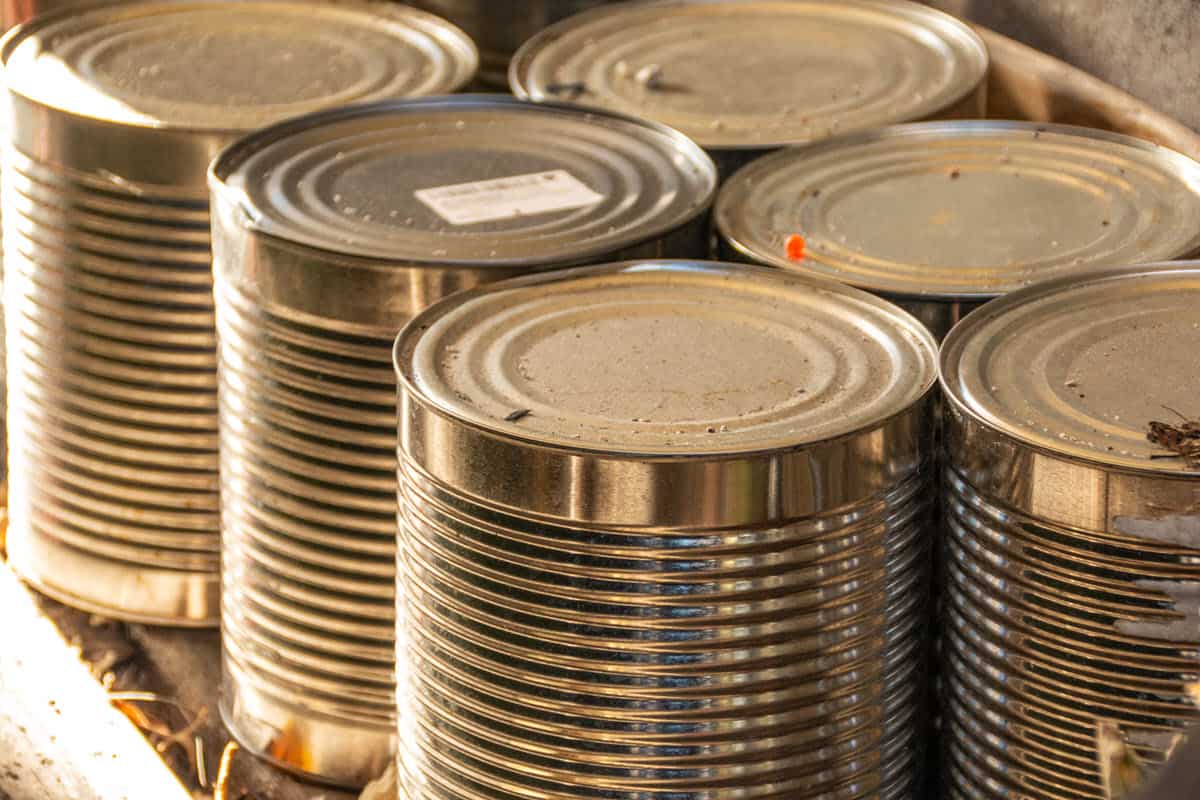
A #10 can is a standard size in the food industry. It holds approximately 109 ounces, or 6 pounds 13 ounces of content, and measures about 7 inches in height and 6.25 inches in diameter.
A #10 can is commonly used for storing bulk food items such as fruits, vegetables, and sauces. It is ideal for food service providers, cafeterias, and bulk storage purposes.
The #10 can is equivalent to roughly 13 cups or 3.1 liters of liquid, making it a practical choice for large-scale food preparation and storage.
This article will delve into everything you need to know about #10 cans, from their size and material to their pros and cons for food storage.
Key Takeaways
- A #10 can is a standard size for storing food, often found in warehouse supermarkets and used for emergency foods.
- The size of a #10 can is approximately 6 3⁄16 x 7 inches, with a volume of 104-117 fluid ounces.
- The amount of food a #10 can hold varies depending on the type of food being stored.
- #10 cans are typically made from tinplate, a sturdy, non-toxic, and non-corrosive material.
- #10 cans are usually used for dry canning and storing non-perishable dry foods like beans and grains.
What is a #10 Can?
A #10 can, pronounced as “ten-pound can,” is a standard size for storing food. Despite its name, the “ten pound” does not refer to the weight of the can’s contents, which varies depending on what you store inside. Instead, “#10” refers to the can’s size, which measures approximately 6 3⁄16 x 7 inches and has an internal volume of 104-117 fluid ounces (about 3 to 3.5 liters). The can itself weighs around 9 ounces.
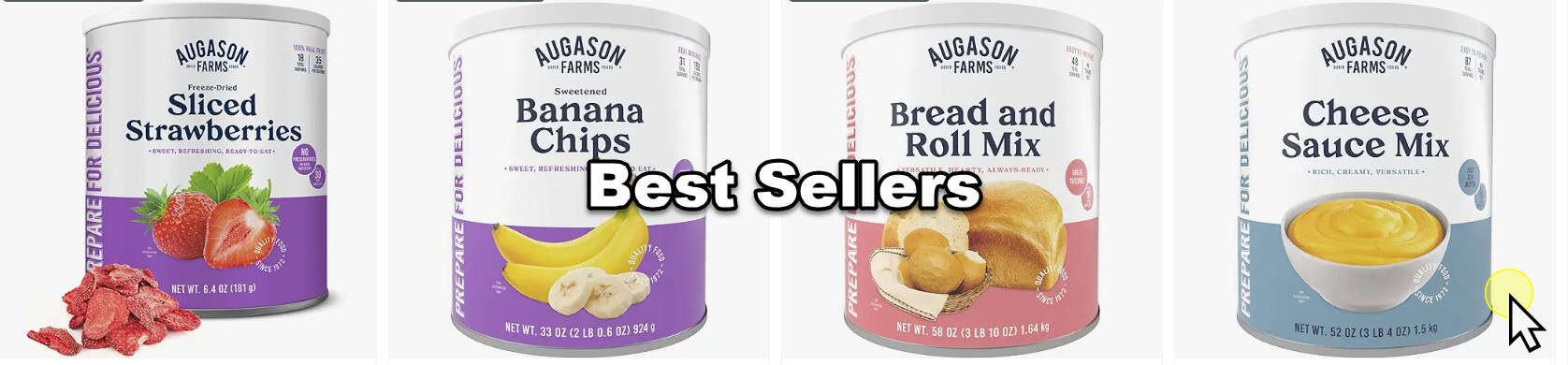
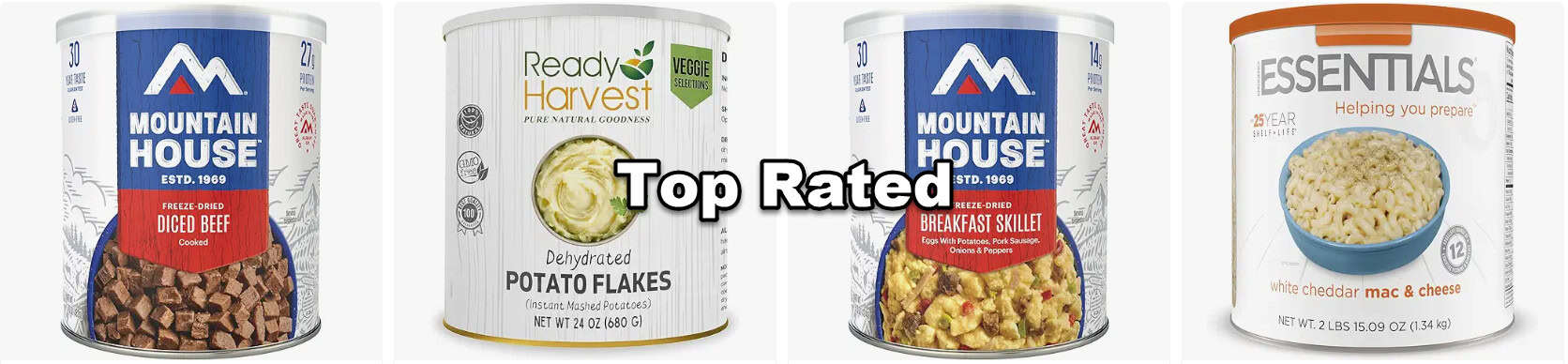
You can often find foods sold in #10 cans at warehouse supermarkets like Costco or Sam’s Club. Emergency food providers, such as Augason Farms or Mountain House, commonly package their products in #10 cans.
How Much Food is in a #10 Can?
The amount of food that fits in a #10 can depends on the food’s density. For instance, a #10 can typically holds 12 cups (106 oz) of cooked corn but only 9 cups (6 oz) of freeze-dried strawberries. Fifty pounds of rice will generally fit in nine #10 cans.
Here’s a quick reference table showing how much food fits into a #10 can by volume and weight:
| Food | By Amount | By Weight |
|---|---|---|
| Soup stock | 13 cups | 117 oz. |
| Cooked corn | 12 cups | 106 oz. |
| Whole peeled tomatoes | 12.5 cups | 105 oz. |
| Salt | 10 cups | 104 oz. |
| Rice | 12.5 cups | 90 oz. |
| Milk powder | 11.6 cups | 55 oz. |
| Soup powder | 10.5 cups | 50 oz. |
| Oats | 11 cups | 39 oz. |
| Egg powder | 11 cups | 33 oz. |
| Peanut butter powder | 8.4 cups | 32 oz. |
| Freeze-dried beef | 11 cups | 28 oz. |
| Freeze-dried strawberries | 9 cups | 6 oz. |
What Are #10 Cans Made From?
Most #10 cans are made from tinplate, which is steel coated in a thin layer of tin. Due to its manufacturing process, this material, also known as electrolytic tin-coated steel, is sturdy, non-toxic, and non-corrosive.
Tinplate cans are sometimes lined with a material, such as acrylic or R enamel, to create a barrier between the food and the can. This lining helps prevent interaction with the metal, which might cause corrosion. Unlined cans should only be used with dry foods.
While you may occasionally find cans made from other materials, such as aluminum or stainless steel, these are rare and are not recommended for food storage.
What Can You Store in #10 Cans?
In theory, you could store any food in a #10 can. Even non-food items like ammunition can be stored in #10 cans. However, #10 cans are generally used for dry canning, storing non-perishable dry foods like beans and grains.
Can You Store Wet Foods in #10 Cans?
While plenty of wet foods are sold in commercially packed #10 cans, storing wet foods or liquids in #10 cans is generally impossible. This is because most #10 cans sold for DIY metal canning are not lined.
Unlined cans, or cans lined with a material incompatible with wet items, will corrode over time. Rust will get into your food, and eventually, holes will form, causing the contents to leak out.
If you want to store liquids in metal cans at home, you’ll need to find cans that are specifically safe to use with liquids.
Pros and Cons of #10 Cans for Food Storage
Pro: Durable
Cans don’t let any light, air, or moisture pass through. So, if stored properly, food in #10 cans can last years or even decades without going bad. Cans are also very durable and can withstand natural disasters like hurricanes without getting damaged. In this sense, cans are the safest way to store emergency food.
Con: Expensive Equipment
You’ll need a can sealer to store food in #10 cans. These are expensive pieces of equipment; even manual can sealers at least $500. Motorized can sealers typically cost thousands of dollars.
The cans themselves are also quite expensive. If you buy online, expect to pay $2 to $3 per can. At this price, it’s often cheaper to buy the cans pre-filled from emergency food companies. Sometimes, you can find #10 cans from local suppliers for less if you pick them up yourself.
Con: Too Large
One issue with #10 cans for emergency food is that they hold a lot of food. This generally is fine with non-perishable dry foods like flour or beans. However, if you buy wet foods in #10 cans, you’ll need to refrigerate any uneaten food. This might not be possible in an emergency situation where the power is down.
Unless you have a very large family and can eat the entire contents of a #10 can in one sitting, it often doesn’t make sense to get such large cans. Smaller cans of food are more practical to use.
Con: Not Reusable
Once you open a #10 can, you cannot use it for food storage again.
Con: Not for Wet or Liquid Foods
As mentioned before, storing wet foods or liquids in #10 cans is generally impossible. If you invest in a home can sealer, you’d also want the flexibility of storing wet items. You might prefer a can sealer for smaller cans than a #10 can sealer.
#10 Cans vs. Mylar
Both #10 cans and Mylar bags are great for storing dry foods because they don’t let light, air, or moisture through. Suppose you put an oxygen absorber into the can or Mylar bag before sealing. In that case, you’ve created an oxygen-free environment, too. Some foods can last for decades when stored like this.
The only real benefit of using #10 cans over Mylar is that they are more durable. Roof beams could fall on a #10 can, and it would likely survive. By contrast, Mylar bags puncture fairly easily. To solve this problem, many preppers just put them in buckets. The buckets are nearly as durable as a can.
However, most people will choose the Mylar+bucket method for storing food long-term because it is much cheaper. The bags cost less than 50 cents each (even cheaper if you buy in bulk). No special equipment is required; you can seal them with a home iron. You can even reuse Mylar bags after opening them.
How to Seal #10 Cans At Home
Once you have the supplies, storing food in #10 cans is very easy. Here are the basic steps:
- Fill the cans with food. Give the cans a little shake when they are halfway full so the contents settle, and you can fit more food inside.
- Label the cans with the contents and date. A simple way to do this is to write on the cans with a permanent marker and then cover it with clear plastic packing tape to protect it.
- Place the lids on the cans.
- Put the cans in the can sealer.
- Follow the can sealer instructions to seal the cans.
- Check the seal before storing.
Storing #10 Cans
Here’s what you need to know about storing #10 cans so the cans and their contents stay good for years or decades.
Do #10 Cans Rust?
Tinplated #10 cans do an excellent job of resisting corrosion, but if kept somewhere wet or humid, they will eventually rust.
Always make sure to keep the cans dry. Never store them in the basement. You also want to keep the cans off concrete floors and away from walls; put them on pallets or shelves instead.
Refrigeration and Freezing Temperatures
There is no need to store canned foods in the refrigerator. The entire point of canning them is to keep them fresh. However, it is generally safe to put unopened cans in the fridge. The only potential issue is that your fridge has high humidity, which could eventually lead to corrosion.
It would be best if you didn’t put opened cans of food into the fridge, though. Once open, the food can react with the opened metal rim of the can. Metal could then leach into the food. However, the risk of this happening is very low. It could take years for any significant leaching to occur.
When storing #10 cans of tomatoes, cooked vegetables, and other wet foods, it’s very important that you don’t let the cans freeze. Even though manufacturers leave some headspace, the expanding frozen food can cause the #10 can to burst open.
You also shouldn’t let dry foods in #10 cans freeze, either. Dry foods contain some moisture, but it is usually evenly distributed throughout the food. When frozen and then thawed, the moisture can clump together, causing wet spots to form. These wet spots could allow pathogens like botulism to grow.
Reusing #10 Cans
Once you’ve used up the contents of a #10 can, you might wonder what to do with the empty can. Here are some ideas:
- Growing containers for plants. Some plants even like rust.
- Mini trash cans.
- Storing random small items around the house.
- Scrap metal: Cut them open with tin snips and hammer them flat. They then can be used for things like an improvised roof.
- Rocket stove: See designs here.
- Make a Hobo stove.
- Make a solar heater: You can use them instead of soda cans.
- “Poor man’s dry canning”: Fill other cans with dry food items. Put the lids you made on top. Tape the lids in place with foil tape.
Conclusion
#10 cans are a versatile and durable option for long-term food storage.
While they have some drawbacks, such as the need for expensive equipment and their unsuitability for wet foods, they offer a reliable solution for storing large amounts of dry foods, especially for prepper food storage.
Whether preparing for an emergency or just wanting to keep your prepper pantry well-stocked with food that lasts a long time, #10 cans are a worthwhile investment.
FAQs for Number 10 Cans
What is a #10 can?
A #10 can is a standard-size can used for storing food. It measures approximately 6 3⁄16 x 7 inches and has a volume of 104-117 fluid ounces. Despite being called a “ten-pound can,” this name doesn’t reflect the actual weight of its contents.
What can you store in a #10 can?
#10 cans are generally used for dry canning, which involves storing non-perishable dry foods like beans and grains.
Can you store wet foods in #10 cans?
While plenty of wet foods are sold in commercially packed #10 cans, it’s generally not possible to store wet foods or liquids in #10 cans yourself. Most #10 cans sold for DIY metal canning are not lined.
How do you seal a #10 can at home?
You’ll need a can sealer to seal a #10 can at home. Fill the cans with food, label them, place the lids on, put the cans in the can sealer, and follow the can sealer instructions to seal the cans. Always check the seal before storing.
Can #10 cans rust?
Tinplated #10 cans do an excellent job of resisting corrosion, but if kept somewhere wet or humid, they will eventually start to rust. Always keep the cans dry and store them in a cool, dry place.
How much food can fit in a #10 can?
The capacity varies significantly depending on the type of food. For example, soup stock holds 117 oz (13 cups), cooked corn contains 106 oz (12 cups), and freeze-dried strawberries only 6 oz (9 cups).
What materials are #10 cans made from?
#10 cans are primarily constructed from tinplate, which is steel with a thin tin coating. This material is sturdy, non-toxic, and resistant to corrosion. Some cans feature special linings like acrylic or R enamel to prevent food-metal interaction.
Can I store wet foods in a #10 can at home?
DIY storage of wet foods in #10 cans is not recommended. While commercially packed wet foods exist in #10 cans, home storage should be limited to dry foods because most DIY cans lack proper lining, which can lead to corrosion and contamination.
How long can food last in a #10 can?
When properly stored in a cool, dry place, food in #10 cans can last for years or even decades. The cans provide complete protection from light, air, and moisture, making them ideal for long-term food storage.
What are the disadvantages of using #10 cans?
The main drawbacks include:
- High equipment costs (can sealers cost $500 or more)
- Expensive cans ($2-3 each)
- Large size that may be impractical for small families
- Cannot be reused after opening
- Limited to dry food storage for home canning
How should #10 cans be stored?
Store #10 cans in a cool, dry place away from humidity. Keep them off concrete floors and away from walls, preferably on pallets or shelves. Avoid storing in basements where moisture can cause rusting.
What can I do with empty #10 cans?
Empty #10 cans can be repurposed as:
- Plant containers
- Storage containers for small items
- Mini trash bins
- Material for DIY projects like rocket stoves or solar heaters
Are #10 cans better than Mylar bags?
#10 cans are more durable than Mylar bags but are more expensive and require special sealing equipment. Mylar bags and buckets provide similar protection at a lower cost and can be sealed with a household iron.
How do you properly seal a #10 can?
To seal a #10 can:
- Fill with food, shaking to settle contents
- Label with contents and date
- Place lid on can
- Use can sealer according to instructions
- Verify seal before storage







Leave a Reply