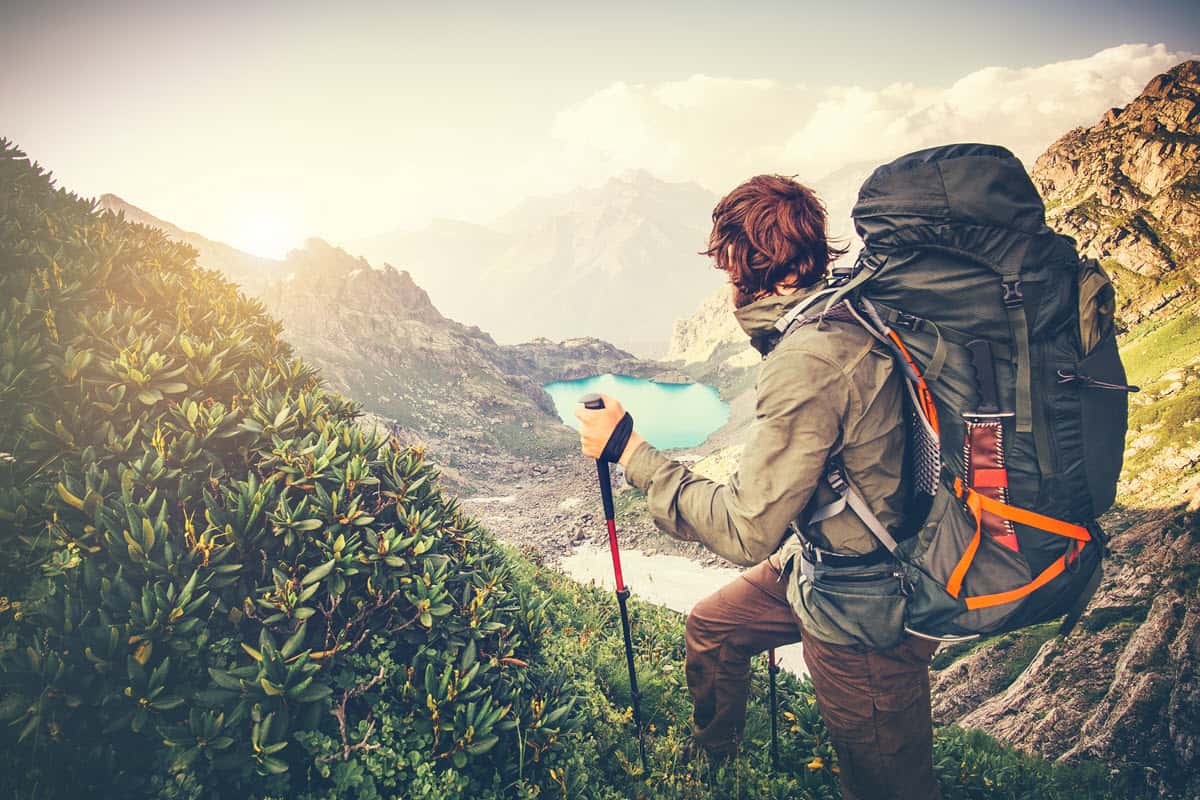
You might imagine that hiking and backpacking are the same, and you take a shot at backpacking without proper planning or the necessary survival skills.
Backpacking in the wild is much more difficult than hiking or camping. It’s essential that you plan and that you account for many variables.
A successful trip can be one of the most meaningful experiences of your life. At the same time, an unsuccessful one can put you in a dangerous survival situation requiring some serious outdoor skills.
So, here’s a list of some essential survival backpacking skills and safety tips you consider before you begin your trip.
Table of Contents
- Top 10 Survival Backpacking Tips
- Want to Learn More Wilderness Survival Skills?
- FAQs for Survival Backpacking
- What is survival backpacking?
- What essential survival gear should every backpacker bring?
- How should I prepare for a survival backpacking trip?
- What should I do if I get lost on a hiking trail?
- How do I stay warm during a survival backpacking trip?
- What should I do if I run out of food and water?
- What should be included in a hiking survival kit?
- Is it safe to go alone on a hiking trip?
- What are some essential survival tips for every hike?
- How can I signal for help in case of an emergency during a backpacking or hiking trip?
Top 10 Survival Backpacking Tips
1. Research The Area
Look for areas that would be comfortable and safe to set up camp and areas that might be dangerous for you to enter. Make note of factors like rivers and streams that can give you a good reference point as you hike. Running water can also be helpful to top off your water bottles (how to live on collected dew in an emergency is one of the classic survival skills, but what a hassle).
However, please read our post about how to purify water in the wild before drinking any water found outdoors.
Before taking trips into the wild, even if we’re talking day hikes, you have to understand the terrain you’re dealing with. Get very familiar with a map of the area and understand its risks. Spending some time brushing up on your compass skills may also be a good idea.
Check out our compass types guide for help with choosing the perfect compass for your journey.
This aspect can feel tedious and needlessly time-consuming because you’ll have your cell phone. That said, cell phone service cuts off in remote areas, and you won’t be able to navigate using Google Maps. Your map will ping your GPS location, but that can only offer a little information in the wilderness.
So, get your bearings for the area you’re entering. Plot your trail and make clear notes about things that will help you navigate if you get lost.
2. Learn About Local Wildlife
Look into the wildlife that exists in the area. Find out whether you’ll be trodding along next to animals and plants that are generally kind to humans.
It’s wise to know if there are large predators in the area, you’ll backpack through. Fortunately, areas home to black bears and mountain lions are safe to hike through. If bears and mountain lions were human hunters, national parks would be terrifying places to visit.
These animals, even wolves, are rarely interested in hunting humans down. They generally prefer to avoid conflict. That said, they will defend themselves and are better fighters than us.
Animals will sometimes attack if they’re provoked, startled, or starving. You can avoid conflict with wildlife if you know how to make yourself known. There are also helpful guidelines on what to do if you encounter respective animals. And it doesn’t hurt to have some bear spray on hand, just in case.
So, while you don’t need to feel threatened by animals in the wild, it’s essential to have a healthy appreciation of their presence.
Find out if you can Use Bear Spray on Humans.
3. Monitor The Weather
The weather might seem unpredictable in the wilderness. Things change fast, and most of the time, those changes are harmless.
You might get brief patches of rain or snow while you go about your way. That said, extreme temperature or wind speed shifts are more dangerous when you’re in the wilderness. All you’ve got are your pack, your tent, and whatever shelter you can find (or make using your bushcraft survival shelter skills).
The best bet is to watch the forecast closely before you head out. It’s also good to start thinking about indications that conditions will change. If you can understand the warning signs of shifts in environmental conditions, you can keep yourself safe and dry.
Part of that process is understanding the terrain you’re hiking through. Make mental notes of places where you will take shelter in case of an extreme weather emergency or other natural disasters.
4. Bring Shelter and Warmth
Unless it’s just a day hike, the most crucial part of your packing process is to include a place to sleep that will keep you warm. The difficulty is that those things must be light, as you’ll carry them on your back all day.
It’s unwise to bring a large tent. There are small, lightweight tents for backpackers. Still, staying dry with only a temporary shelter improvised with a tarp that covers your sleeping bag is also possible.
The sleeping bag you choose to pack with your gear is the most critical thing in terms of warmth. Explore lightweight sleeping bags that retain a lot of heat. Most importantly, ensure that the bag you buy is rated for the climate you’ll be in.
If it’s very cold, get your body temperature up before bedtime by doing some exercise. And, of course, it’s good to know how to build a campfire.
It’s also wise to carry pads that sit between your sleeping bag and the ground. Pads help you stay warm by insulating the heat produced from your body against the cold, wet ground.
5. Bring Effective Cooking Utensils
There is a better time to bring your old cast iron camping pot that you use when car camping; keep it light.
Traveling light requires an efficient way to cook food that doesn’t take up too much space. Look for campfire cooking equipment options that serve multiple purposes and are simple to use. For example, a cooking cup that also serves as a bowl is a great choice.
You don’t need too much in the way of utensils, but you have to make sure that you can boil water somehow. You can also adjust things depending on the type of food that you bring along.
Your best bet is to practice cooking with these utensils on an open fire before you head out. This will give you an idea of how well-prepared you are and whether you need to run out and grab other cooking gear.
6. Plan Your Meals
Backpacking requires that you have a healthy appreciation of the state of your body, your metabolism, and what you’re eating. Our normal lives don’t reveal the flaws of our diets like hiking does.
You’re outside expending energy all day, so you’ll feel the energy that your diet provides, and you’ll feel when that energy starts to go away. Another difference between wilderness and everyday life is that you put yourself in danger when you don’t have energy.
Wilderness camping and hiking require that you expend energy to accomplish certain tasks. You need to make a shelter, and you need to make a fire, for example. You need calories to have the energy to do those things.
So pack enough food to get you through the whole trip. Ensure that it is nutritious and won’t slow you down at all. You’ll need protein, sugar, some carbs, and enough of them to get you through your journey.
Tip: The types of food that you use for prepper food storage are the same types of food that is perfect for survival backpacking.
7. Practice Fire Building
Making a fire is easy sometimes and very hard at other times. We can usually throw a few logs into a fire pit, grab some fast-burning fuel as kindling, and start a fire.
I recommend keeping a stash of cotton ball fire starters and Fatwood in your fire-starting kit; both are extremely lightweight, pack away nicely, and can help you quickly start a fire. I also highly recommend the Uberleben Tinder Wick, which is a perfect size and weight for backpacking.
It’s a different story when you’re in the wilderness facing a serious survival situation. One of the basic wilderness survival skills is how to build a campfire using materials gathered in the wild.
You might have to forage to find the proper fuel wood, so you’ll want to learn about the best hatchet for any job.
Try to work on building a fire from scratch before you head out. If you’re so inclined, try doing so without using a lighter or match. Carry a supply of lighters and matches on your trip, but you should learn how to start a fire without matches if you end up without your survival gear.
8. Get Into Shape
You need to understand that a backpacking trip is about more than learning a few outdoor skills — it’s also arduous to go through. It’s enjoyable, like any trip, but it’s hard work.
Your body has to be ready to go through that process. If you’re not ready to hike for a few days with very little time to relax, you should work on changing that before your hiking trip.
It’s not like you’re running a marathon. Still, a level of endurance and physical fitness is involved with the whole survival backpacking process. Start hiking in your local state parks and consider doing some running to get your body in the best shape possible. If you can sprint for a half mile, you’ll know you’re in good condition.
9. Optimize Your Survival Backpack List
Make sure you have everything you need and start to strip your back down to the essentials. The lighter your survival kit backpack is, the easier your trip will be on your body.
You can only go into the wilderness with things like a first-aid kit or a sleeping bag. Ensure you’ve got what you need, and double-check that you haven’t missed anything.
Here’s a sample list of gear to pack that will give you some ideas and get you started:
- drinking water (learn how to purify water in the wild)
- map
- compass
- signal mirror (to signal for help)
- headlamp
- sunscreen
- basic first aid kit (including pain relief tablets and topical antibiotics to prevent infection)
- first aid guide to treating common injuries
- insect repellent
- spare batteries (for when those headlamp batteries die)
- knife
- tent or tarp
- trekking poles (not necessary, but nice to have)
- duct tape
- fire starting kit (e.g., ferro rod, cotton balls, waterproof matches, tinder, survival lighter, etc)
- drinking water
- emergency blanket
- fishing line
- water bottles
- water purification tablets for clean water
- food
- spare clothing
- cooking gear
- Biodegradable soap
- Waterproof Matches and a free Everstryke Pro Perma-match
And here’s a customizable day hike checklist that’s also very helpful for supplying your survival backpack.
10. Let Someone Know Your Plans
Another vital thing to add to your backpacking trips to-do list is to make sure somebody knows your entire course. If you get lost or stuck for some reason, it’s good to know that there are people out there who know where you are.
It’s unlikely that this would happen, but there’s always a chance that a person gets lost in the wilderness. It’s hard to search a massive area like that, so narrowing it down to your intended route makes things much safer for you.
Letting someone know where you expect to be may not sound like it belongs on a list of wilderness survival skills, but it can save your life.
Want to Learn More Wilderness Survival Skills?
Survival backpacking isn’t easy, but it can be one of the most meaningful things you ever do. You have to be sure you’re prepared and knowledgeable about what you’re entering and how to stay safe.
Backpacking in the wilderness isn’t easy, but it can be one of the most meaningful things you ever do. You have to be sure you’re prepared and knowledgeable about what you’re entering and how to stay safe.
So, check out our other articles about choosing the best survival gear, learning the most essential survival skills, and how to start prepping.
FAQs for Survival Backpacking
What is survival backpacking?
Survival backpacking is a type of backpacking trip that involves venturing into the backcountry with minimal gear and relying on survival skills and techniques to stay safe and comfortable.
What essential survival gear should every backpacker bring?
Every backpacker should bring a first aid kit, a whistle for signaling for help, a headlamp for staying the night, a sleeping bag for staying warm, and a map and compass to navigate in case of an emergency.
How should I prepare for a survival backpacking trip?
To prepare for a survival backpacking trip, you should research the area you plan to hike, create an itinerary, pack essential survival gear items, bring a water filter or purification tablets, learn how to use your survival tools, and let someone know your planned route and expected return date.
What should I do if I get lost on a hiking trail?
If you get lost on a hiking trail, you should first stay calm and try to retrace your steps. Look for landmarks that may help you find your way back, and use your map and compass to navigate. If you can’t find your way, stay where you are, make yourself visible, and signal for help with a whistle.
How do I stay warm during a survival backpacking trip?
To stay warm during a survival backpacking trip, wear layers, bring a high-quality sleeping bag, and make a shelter using natural materials like branches and leaves.
What should I do if I run out of food and water?
If you run out of food and water on a backpacking or hiking trip, you should find water sources, such as streams or lakes, and purify the water before drinking. You can also try to find sources of wild edibles, such as berries or nuts, but be sure to do your research and only consume safe plants. You should know how to signal for help and contact rescuers in an emergency.
What should be included in a hiking survival kit?
A hiking survival kit should include essential survival items such as a knife, fire starter, first aid supplies, a whistle, and a map and compass. It’s important to have items you know how to use that can be useful in an emergency.
Is it safe to go alone on a hiking trip?
Going with someone else on a hiking trip is always a good idea. However, if you venture out alone, ensure you have the right survival gear and know how to use it. Tell someone your itinerary and expected return date, and stick to well-marked hiking trails. Be sure to check out our Day Hike Checklist for a comprehensive list of items to carry with you.
What are some essential survival tips for every hike?
Some essential survival tips for every hike include staying hydrated, bringing a map and compass, knowing how to use your survival gear, dressing in layers, and telling someone your itinerary. Always stay on the hiking trail, and take a wilderness survival course if you plan on backpacking or hiking often.
How can I signal for help in case of an emergency during a backpacking or hiking trip?
To signal for help in an emergency during a backpacking or hiking trip, use your whistle to create three short bursts of sound. This is the universal signal for distress and can alert rescuers to your location. You can also create a signal fire using natural materials like dry grass and branches or a visible signal like a large “X” made of rocks or sticks.





Leave a Reply